Euclyd raises $231m to develop non-GPU architecture aimed at lowering data center costs, power use
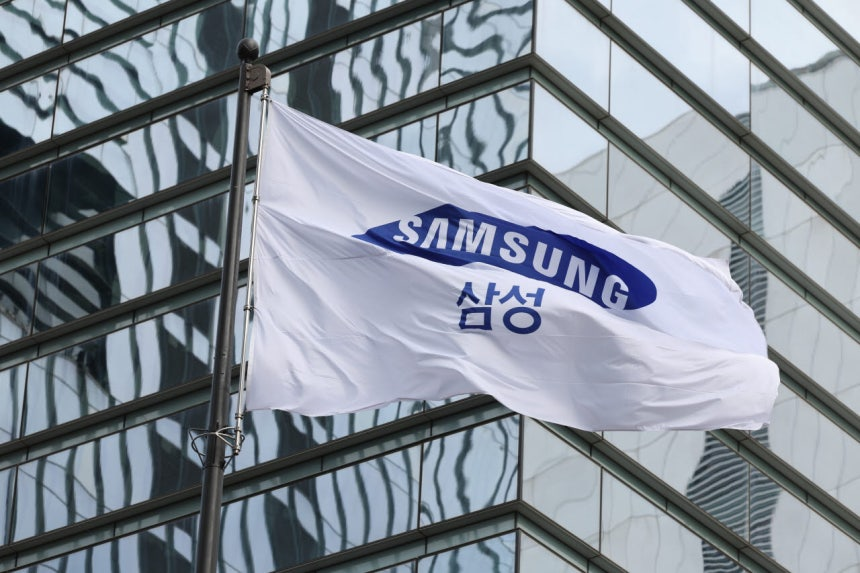
Samsung Electronics has co-led a 200 million euro ($231 million) funding round for Dutch startup Euclyd, backing a new chip architecture designed to cut the cost and energy consumption of artificial intelligence inference.
Euclyd CEO Bernardo Kastrup told CNBC that Samsung participated in the Series A round alongside Somerset Capital Partners, Innovation Industries and the Scaleup Europe Fund, managed by EQT.
Kastrup said Samsung could offer more than capital, pointing to its expertise in memory chips, engineering and supply chains. Such capabilities could prove valuable as Euclyd develops its processors and memory systems in tandem.
“Samsung can help us in more ways than money,” Kastrup said. “They are one of the biggest memory manufacturers in the world. They do a lot of engineering, they know a lot about systems, they know the supply chain, they have a huge network.”
Founded in 2024, Euclyd is developing an AI computing system based on an architecture fundamentally different from the graphics processing units that dominate the market. Its technology targets inference — the process through which a trained AI model responds to queries and performs tasks.
Nvidia’s GPUs, originally developed for gaming, dominate AI computing. But technology companies including Google, Amazon, Meta and OpenAI are developing chips tailored to their own workloads to lower costs and reduce their reliance on Nvidia.
Euclyd is entering that race with a non-GPU architecture it says can lower data center costs and power consumption. The technology, however, has yet to be proven at commercial scale.
The startup plans to sell chips and server racks for secure, self-hosted AI inference, while also licensing its technology to companies developing their own processors. It aims to begin shipping chip systems in 2028 and serve thousands of corporate customers by 2030, Kastrup said.
The investment marks another step in Samsung’s push to broaden its position across the AI industry. Last week, Samsung Electronics led a 3 billion euro Series D funding round for French AI model developer Mistral AI and acquired a strategic stake in the company.
Samsung and Mistral also agreed to develop customized, on-premises AI systems for semiconductor design and manufacturing. Samsung plans to apply Mistral’s technology to data analysis, defect detection and production optimization while keeping sensitive chip data within its own infrastructure.
herim@heraldcorp.com